Table of Contents
Follow Patricia Alegsa on Pinterest!
Date Properties and Benefits for Digestion
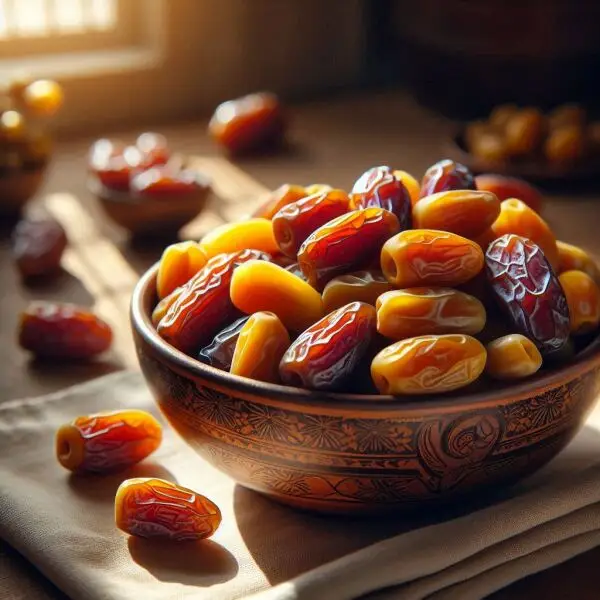
Dates are brown, wrinkled fruits that grow on date palms. These trees are cultivated mainly in warm regions of the Middle East and North Africa.
Because of their appearance, they may resemble large raisins. However, they have a fleshier texture and an intense, sweet flavor. In Western countries, they are usually sold dried, which gives them a firmer consistency and allows them to be stored for longer.
One of their most notable qualities is their fiber content. A serving of four large dates can contain around 7 grams, although the exact amount depends on the variety and size.
Fiber supports intestinal regularity, prolongs feelings of fullness, and may help prevent constipation. In addition, as part of a balanced diet, it contributes to healthy cholesterol levels and digestive health.
If you are not used to consuming much fiber, add dates little by little and accompany them with enough water. Increasing fiber intake all at once can cause gas or bloating in some people.
You can also try lemon verbena tea to improve your digestion, always paying attention to how your body responds.
Dates, Energy, and Blood Sugar Control
Dates provide quick energy due to their natural sugar content. A serving of four large dates can come close to 300 calories and contain around 60 grams of sugar, depending on their size and variety.
This does not mean you should avoid them. Unlike refined sugar, dates also provide fiber, minerals, and antioxidants. Their fiber makes the digestion and absorption of sugars slower, especially when you pair them with foods that provide protein or healthy fats.
For example, you can eat one or two dates with nuts, plain yogurt, or a tablespoon of unsweetened peanut butter. This combination is usually more filling than eating several dates on their own.
Even so, they are not a food without limits. If you have insulin resistance, prediabetes, or type 2 diabetes, it is advisable to watch your portion size and follow your health professional’s recommendations. Blood glucose responses can vary from one person to another.
If you need to explore this topic further, check out these tips for controlling blood sugar.
Vitamins, Minerals, and Antioxidants in Dates
Dates provide important electrolytes and minerals, including potassium and magnesium. A generous serving can provide close to 15% of the recommended daily value of both nutrients, although this varies according to the amount consumed.
Potassium and magnesium play a role in fluid balance, muscle function, and numerous processes in the body. Dates also contain copper, a mineral related to the formation of red blood cells, connective tissue, and collagen production.
This does not make dates a skin treatment, as is sometimes claimed on social media. Their nutritional contribution can complement a varied diet, but no single food produces miraculous changes on its own.
They also contain antioxidants, such as flavonoids and carotenoids. These compounds help protect cells against oxidative damage. Some studies investigate their relationship with a lower risk of chronic diseases, including diabetes, Alzheimer’s disease, and certain types of cancer. However, eating dates alone cannot prevent these diseases.
How to Include Dates in Your Daily Diet
Dates are versatile and easy to add to different meals. You can eat them on their own as a snack, chop them over yogurt or oatmeal, add them to a salad, or use them in smoothies and homemade desserts.
They also work as an alternative to refined sugar, although they still provide sugars and calories. To make date paste, remove the pits, soak the fruits if they are very dry, and process them with a little water until you obtain a creamy mixture.
This paste can replace sugar in some recipes at an approximate one-to-one ratio. However, you may need to adjust the liquids, as it changes the moisture and texture of the preparation.
A practical way to enjoy them is to set aside a portion before you start eating. Put the rest of the package away and pair one or two dates with nuts. This way, you can enjoy their flavor without eating them automatically.
Dates can be a delicious and nutritious snack, but it is important to eat them in moderation. Listen to your hunger cues, check the size of each piece, and adjust the amount to your needs. Balance, more than restrictions, will allow you to enjoy their benefits. 🌿