Table of Contents
- What happens inside a hard‑boiled egg (simple version)
- The big villain: eggs that are too fresh
- Why some eggs are so troublesome to peel
- Tricks to peel hard‑boiled eggs without suffering
- 1. Don’t use the freshest eggs from the fridge
- 2. Start with boiling water, not cold water
- 3. Tap the large end of the egg before boiling it
- 4. Use an ice bath whenever you can
- 5. Add a splash of vinegar to the water
- 6. Also add salt to the water
- 7. Peel the eggs under water
- 8. Roll the egg to loosen the shell
- My "almost foolproof" method for easy‑to‑peel hard‑boiled eggs 😏
- Typical mistakes that make peeling harder
- Quick summary (for when you’re already hungry)
Follow Patricia Alegsa on Pinterest!
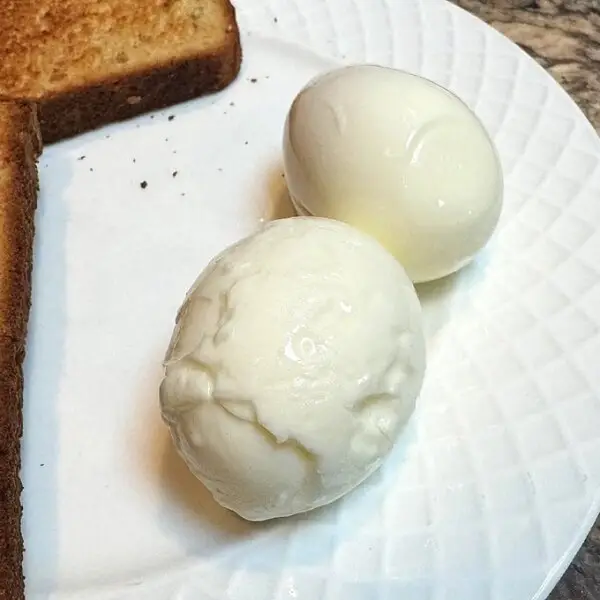
Typical scene: you’re hungry, you boil some eggs, you go to peel them and the shell comes off in microscopic pieces. The egg white ends up all chewed up and you think: “What did I do to you?” 😤
Relax, your hand works fine. The problem almost always comes from the egg and how you cook it. Let’s get to it.
What happens inside a hard‑boiled egg (simple version)
An egg has several important parts:
- Shell: hard, made of calcium carbonate.
- Inner membrane: a thin skin stuck to the shell.
- Egg white: almost pure protein and water.
- Yolk: the yellow part, rich and creamy.
The issue appears in the relationship between white, membrane and shell.
If the white sticks strongly to the membrane, the shell comes off with difficulty and the white gets damaged.
I suggest you read: The trend of "influencers" eating eggs with the shell: does it work?
The big villain: eggs that are too fresh
Many people are surprised when they find out, but overly fresh eggs make peeling a lot harder.
A very fresh egg has:
- Low pH (more acidic).
- An egg white that sticks firmly to the membrane.
- A membrane very stuck to the shell.
Result: when peeling, the membrane doesn’t separate well and you tear off pieces of the white.
By contrast, when the egg is one or two weeks old:
- The pH rises a bit.
- Some air enters.
- The white peels away from the membrane more easily.
And suddenly… magic! The egg comes out almost whole and you feel like you’ve mastered the kitchen 😎.
I also suggest you read: The best ways to incorporate eggs into your diet
Why some eggs are so troublesome to peel
Four factors are at play:
- Egg freshness
Super‑fresh eggs tend to stick more. Eggs that are 7–14 days old usually peel much better.
- Cooking method
Odd timings or abrupt uncontrolled changes mess up the membrane.
If you overcook, the white becomes rubbery; if you undercook, the white becomes stickier.
- Cooling
Without a good cold shock, the white won’t contract and the shell clings more tightly.
- Peeling technique
Peeling roughly, dry and without technique, ruins more whites than a blunt knife.
Tricks to peel hard‑boiled eggs without suffering
Now then, here’s what really works, mixing kitchen science and folk wisdom.
1. Don’t use the freshest eggs from the fridge
Several home cooks sum it up like this:
“Very fresh eggs peel worse. Leave them in the fridge for one or two weeks and then boil them. The shell will come off almost by itself.”
For hard‑boiled eggs that are easy to peel:
- Buy the eggs.
- Store them in the fridge for 7 to 14 days.
- After that time, boil them.
Only have same‑day eggs and in a hurry? Then combine several tricks: vinegar, salt, ice bath and good technique.
2. Start with boiling water, not cold water
Many people cook eggs starting from cold water.
However, another group passionately defends the opposite method:
“I place room‑temperature eggs directly into already boiling water for 12 minutes,
then transfer them to an ice bath and peel them almost immediately.”
Boiling water causes a sudden temperature change. The egg white contracts a bit and a small space appears between the white and the membrane.
How to apply this method:
- Fill a pot with water and bring it to a good boil.
- Take the eggs out of the fridge and let them warm slightly (a few minutes).
- Reduce the heat a bit so they don’t bounce.
- Lower the eggs carefully using a spoon.
- Cook for 10–12 minutes, depending on size.
- Then transfer them straight to an ice bath.
3. Tap the large end of the egg before boiling it
This trick sounds aggressive, but it works surprisingly well:
“Before boiling them, gently tap the large end of the egg until it cracks slightly.
That way the eggs turn out perfect and the shell doesn’t stick.”
At the wide end of the egg lies a small air chamber.
If you slightly crack that area:
- A bit of hot water enters.
- The membrane detaches more easily.
- Then the shell comes off with less resistance.
How to do it without destroying the egg:
- Hold the egg in your hand.
- Gently tap the wide end against the countertop.
- Look for only a light crack, not a premature scrambled egg 😅.
After that, boil the eggs as usual. When you peel them, you’ll notice that part opens more easily and helps with the rest.
4. Use an ice bath whenever you can
This isn’t really negotiable: the ice bath makes a huge difference.
“I quickly transfer them to a container with water and ice and then they peel wonderfully.”
The cold:
- Makes the white contract a bit.
- Helps the membrane separate better from the shell.
- Stops the cooking and keeps the yolk juicier, without that gray‑green ring around it.
Step by step:
- Prepare a large bowl with very cold water and lots of ice.
- Take the eggs from the pot and place them immediately in that bowl.
- Leave them there for at least 10 minutes.
- Peel while they still feel cold to the touch.
5. Add a splash of vinegar to the water
Several people trust this trick:
“You have to add white vinegar to the water. Just a splash.”
“Add a splash of vinegar to the boiling water and then transfer them to an ice bath when you take them out,
they come out perfect every time.”
Vinegar doesn’t enter the white dramatically, but it acts on the shell:
- It slightly affects the calcium carbonate of the shell.
- It helps the shell crack better.
- When an egg breaks in the pot, vinegar helps the white set quickly and not leak everywhere.
How to use it:
- For each liter of water, add 1–2 tablespoons of white vinegar.
- Boil the eggs as usual.
- Then transfer them to the ice bath.
6. Also add salt to the water
Another classic repeated tip:
“Add salt to the water while you boil the eggs. You’ll thank me later.”
Salt:
- Slightly raises the boiling point of the water.
- Helps the white set faster if the egg cracked.
- Improves peeling in many cases, especially when combined with other tricks.
Practical tip:
- Add 1 tablespoon of salt to the pot of water.
- If you want a powerful combo, mix: salt + vinegar + ice bath 💪.
7. Peel the eggs under water
Once you have the eggs cooked and cold, you can further improve the experience with running water:
“Roll the egg gently and peel it under the stream of water. The difference is huge.”
How to do it:
- Gently tap the egg on several sides to crack the shell.
- Roll it on the counter with your hand, without squashing it.
- Peel under a stream of cold water or in a bowl of water.
The water seeps between the shell, the membrane and the white. That helps lift bits of shell without tearing half the egg with each pull.
8. Roll the egg to loosen the shell
This trick has a bit of stress‑relief therapy:
- Tap the egg all over until you see many small cracks.
- Place it on the table.
- Press with the palm of your hand and roll it slowly.
The shell breaks into multiple fragments and the membrane loses its grip.
Then, start peeling from the large end, where the air chamber sits. Often, the shell comes off in large pieces. And you smile. :)
My "almost foolproof" method for easy‑to‑peel hard‑boiled eggs 😏
If you want a clear plan, you can follow this routine:
- Use eggs that have been in the fridge for 1–2 weeks.
- Fill a pot with water and bring it to a boil.
- Add a splash of vinegar and a tablespoon of salt.
- Carefully tap the wide end of each egg until you see a small crack (optional, but helpful).
- When the water is boiling well, lower the heat a bit and put the eggs in with a spoon.
- Cook for 10–11 minutes for a firm but not dry yolk.
- Transfer the eggs directly to an ice bath.
- Wait 10–15 minutes.
- Tap, roll and peel under cold water.
With this system, most eggs come out smooth, without “bite marks” on the white.
You’ll feel almost like a professional chef… but without the pressure of a restaurant 😉.
Typical mistakes that make peeling harder
- Boiling for half an hour “just in case”
The yolk dries out and turns gray, the white hardens too much and peeling gets worse.
- Letting the eggs cool in the air
Without a cold shock, the white doesn’t contract and the shell grips more tightly.
- Using only freshly laid eggs
Those eggs look better for poached or pan‑fried preparations.
For hard‑boiled eggs, ones that rest a few days cause much less trouble.
Quick summary (for when you’re already hungry)
Hard‑boiled eggs are difficult to peel mainly because of:
- Eggs that are too fresh.
- Poorly controlled cooking methods.
- Lack of a good ice bath.
- Careless peeling technique.
And you can win the battle if:
- You use eggs that have been refrigerated for several days.
- You start cooking with boiling water, add salt and a little vinegar.
- You cool them quickly in an ice bath.
- You tap, roll and peel under cold water.
If you want, tell me how you make them now and we’ll tweak the method until you peel eggs like a kitchen ninja 😄.