Table of Contents
Follow Patricia Alegsa on Pinterest!
A boat on the roof: the incredible story of Lampulo
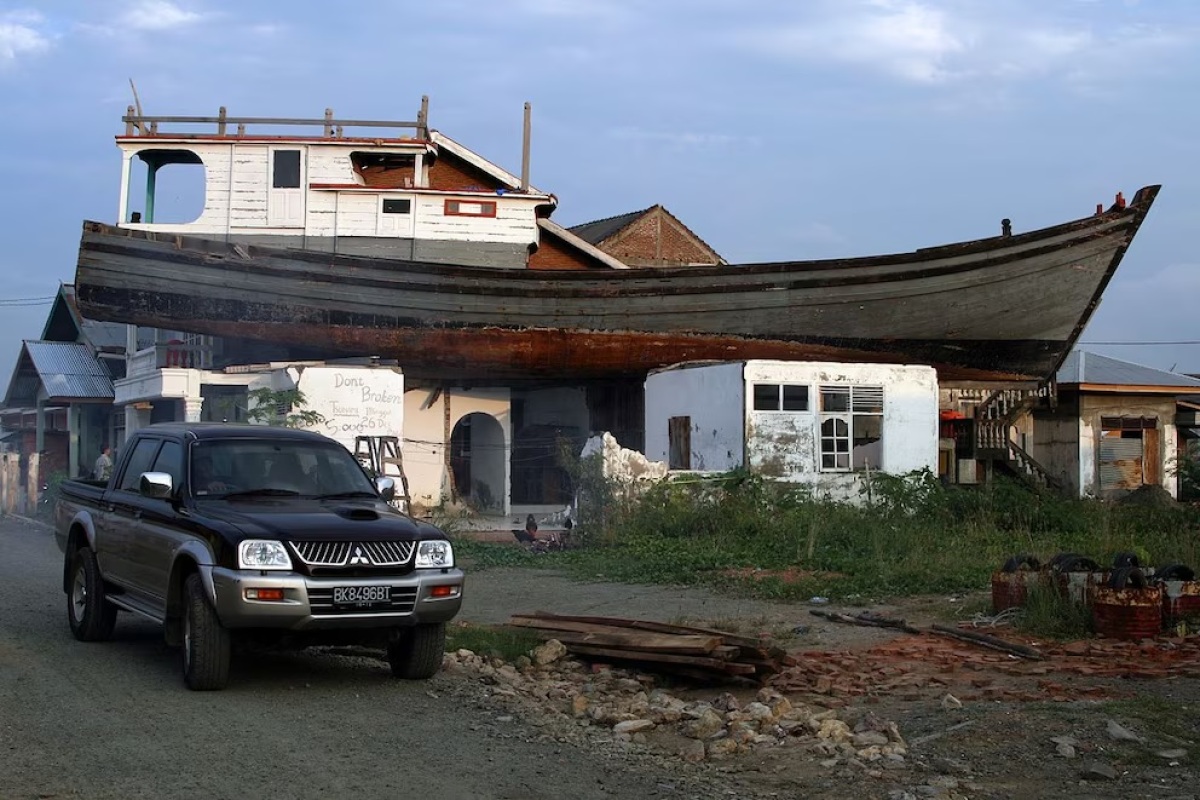
Let's go to Indonesia! Lampulo, a small village, has become a peculiar tourist destination. Why? A fishing boat rests on the roof of a house, as if it has decided that aerial fishing is the new trendy sport. The signs say it all: “Kapal di atas rumah,” which means "the boat on top of the house."
This boat is not only an architectural curiosity but also a miracle that saved 59 lives during the 2004 tsunami. Isn't it incredible how sometimes safety can be found in the most unexpected places?
Fauziah Basyariah, one of the survivors, shares her story with the emotion of someone who has cheated death. Imagine being with your five children and seeing a giant wave coming. Not knowing how to swim, your only hope is a boat that appears as if by magic. And boy, did it appear! Her eldest son, a boy of just 14 years, managed to make a hole in the roof so that everyone could escape to the rescue boat.
Fauziah Basyariah, one of the survivors, shares her story with the emotion of someone who has cheated death. Imagine being with your five children and seeing a giant wave coming. Not knowing how to swim, your only hope is a boat that appears as if by magic. And boy, did it appear! Her eldest son, a boy of just 14 years, managed to make a hole in the roof so that everyone could escape to the rescue boat.
Fauziah and her family, along with others, found refuge in this peculiar ark of Noah.
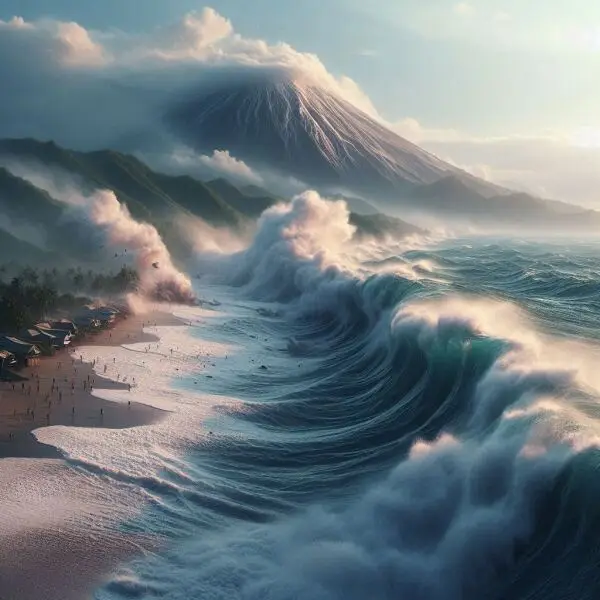
On the morning of December 26, 2004, the Earth decided it was time to show its strength. A magnitude 9.1 earthquake shook the Indian Ocean, unleashing an energy so colossal it would be equivalent to 23,000 atomic bombs. Can you imagine?
The tsunami that shook the world
On the morning of December 26, 2004, the Earth decided it was time to show its strength. A magnitude 9.1 earthquake shook the Indian Ocean, unleashing an energy so colossal it would be equivalent to 23,000 atomic bombs. Can you imagine?
Tsunamis, ruthless and swift, traveled at speeds of between 500 and 800 kilometers per hour, hitting 14 countries. Banda Aceh, in Indonesia, was one of the most devastated places, with 30-meter waves that wiped out entire communities.
This disaster, the deadliest on record, resulted in nearly 228,000 dead or missing and displaced millions. The effects were not limited to the loss of human lives; the environmental damage was immense.
This disaster, the deadliest on record, resulted in nearly 228,000 dead or missing and displaced millions. The effects were not limited to the loss of human lives; the environmental damage was immense.
The infiltration of saltwater into aquifers and fertile land continues to affect communities even 20 years later. Perhaps it is time for humanity to take serious notes on how to prevent such disasters.
The 2004 tsunami highlighted a sad reality: the Indian Ocean lacked a tsunami warning system. While in the Pacific, alert management systems are a lifesaver, in the Indian Ocean, the giant waves arrived without warning. This detail, simple yet crucial, could have saved thousands of lives.
The price of lack of preparation
The 2004 tsunami highlighted a sad reality: the Indian Ocean lacked a tsunami warning system. While in the Pacific, alert management systems are a lifesaver, in the Indian Ocean, the giant waves arrived without warning. This detail, simple yet crucial, could have saved thousands of lives.
The comparison is painful, especially when we know that Japan conducts evacuation drills regularly and constructs its buildings to withstand earthquakes.
The cost of this disaster is not only measured in human lives. It is estimated that the material damages reached $14 billion. The international community, with donations from figures like Michael Schumacher and Bill Gates, tried to alleviate the economic impact. However, the true cost lies in the lack of a warning system that could have prevented such destruction.
The tsunami of 2004 left us lessons that we cannot ignore. We need warning systems in all the oceans of the world. The National Oceanic and Atmospheric Administration of the United States emphasized the need to be prepared, not just in the Pacific, but in all seas. How many more "arks of Noah" do we need to realize that preparation is key?
In the future, our hope is that the inhabitants of the coasts of the Indian Ocean and around the world do not rely on miracles to survive. Instead, we must work to ensure that safety is not a matter of luck, but of planning and action.
The cost of this disaster is not only measured in human lives. It is estimated that the material damages reached $14 billion. The international community, with donations from figures like Michael Schumacher and Bill Gates, tried to alleviate the economic impact. However, the true cost lies in the lack of a warning system that could have prevented such destruction.
Lessons from the past, hopes for the future
The tsunami of 2004 left us lessons that we cannot ignore. We need warning systems in all the oceans of the world. The National Oceanic and Atmospheric Administration of the United States emphasized the need to be prepared, not just in the Pacific, but in all seas. How many more "arks of Noah" do we need to realize that preparation is key?
In the future, our hope is that the inhabitants of the coasts of the Indian Ocean and around the world do not rely on miracles to survive. Instead, we must work to ensure that safety is not a matter of luck, but of planning and action.
In the end, nature reminds us that, although powerful, we can coexist with it if we learn to respect its signs and prepare adequately.