Table of Contents
Follow Patricia Alegsa on Pinterest!
Prunes: Key Nutrients and Properties
What we eat every day has a major influence on our health. Within a varied diet, some foods provide particularly interesting nutrients. One of them is the prune.
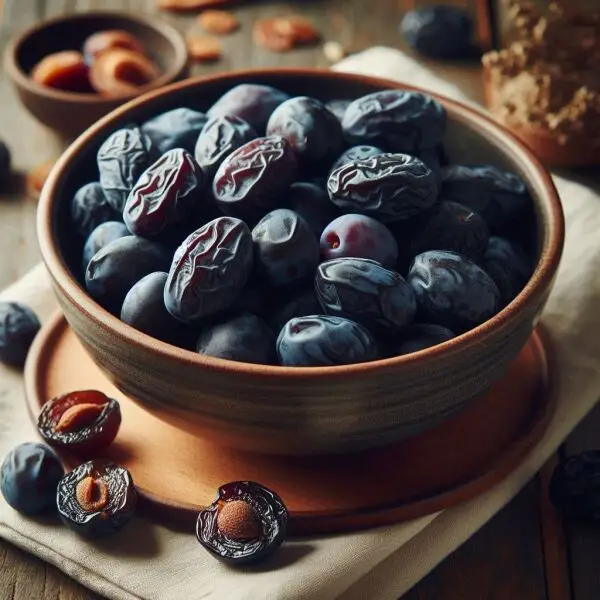
These dried fruits provide fiber, potassium, vitamin K and antioxidant compounds. When some of the water is removed from fresh fruit, its nutrients and natural sugars become more concentrated. That is why they have a sweet flavor and a texture that can help satisfy the urge to snack between meals.
Their fiber content supports regular bowel movements. They also contain sorbitol, a natural sugar that may help soften stools. This combination explains why prunes are one of the best-known food-based remedies for occasional constipation.
That said, they do not work miracles on their own. For better results, it is advisable to pair them with enough water, daily movement, and a diet rich in vegetables, fruits, whole grains and legumes. If you would like to better understand the importance of this nutrient, it may also help to read what happens when you eat too little fiber and how it affects your microbiome.
Benefits of Prunes for the Heart
Prunes can be part of an eating plan focused on cardiovascular health. Their soluble fiber contributes to cholesterol control as part of a healthy lifestyle, while potassium plays a role in normal muscle function and blood pressure regulation.
Some research has observed possible improvements in certain cardiovascular markers with regular consumption. However, no food can replace a balanced diet, exercise or treatment prescribed by a health professional.
You can pair them with heart-healthy foods such as oats, nuts or plain yogurt. Legumes are also great allies; to learn more, see how to include legumes to support cholesterol and heart health.
Prunes to Support Bone Health During Menopause
Another studied benefit is related to bone health, especially in women after menopause. Some scientific studies suggest that regular consumption may help preserve bone mineral density thanks to nutrients such as vitamin K, potassium and certain polyphenols.
Studies usually evaluate specific amounts over several months, but this does not mean there is one universal serving size for everyone. Bone health also depends on protein, calcium and vitamin D intake, as well as strength training and appropriate medical checkups.
If you are going through this stage, think of prunes as a nutritious complement, not an isolated treatment. If you have osteoporosis, osteopenia or are making major changes to your diet, consult your doctor or nutritionist.
What Is the Best Time to Eat Prunes?
There is no required time to eat them. The best time is the one that allows you to include them regularly and notice how your body responds.
If you are looking to relieve constipation, you can try a small serving in the morning, before or with breakfast, along with a glass of water. You can also soak them overnight to make them softer. Some people prefer to eat them after dinner and notice their effect the following day.
Start with a moderate amount. Eating too many at once can cause gas, bloating or diarrhea, especially if you are not used to eating fiber. Give your body time and gradually increase the portion if needed.
How to Add Prunes to Your Diet
You do not always have to eat them on their own. Their sweetness makes them suitable for both simple preparations and more elaborate recipes:
- Add them, chopped, to oatmeal, yogurt or breakfast cereal.
- Pair them with walnuts or almonds for a snack.
- Add them to salads, rice dishes or stews.
- Use them in compotes or homemade desserts to reduce added sugar.
- Blend them with water after soaking them if you prefer a smooth texture.
Although they are nutritious, they also contain concentrated natural sugars and calories. If you have diabetes, irritable bowel syndrome, frequent diarrhea or follow a special diet, it is advisable to ask what amount is best suited to you.
Other Dried Fruits You Can Eat
Prunes are not the only option. Dried figs, raisins and dried apricots also provide fiber, minerals and energy. Varying them will make your meals more interesting and allow you to obtain different nutrients.
When buying them, check the label and choose, whenever possible, products with no added sugar. Dried fruit already has plenty of natural sweetness.
The next time you find prunes at the supermarket, remember that they are much more than a sweet snack. In an appropriate amount and as part of a balanced diet, they can support the care of your gut, heart and bones. The key is consistency, moderation and listening to how your body responds.