Table of Contents
Follow Patricia Alegsa on Pinterest!
Controlled fire 400,000 years ago
A recent study in Nature shook the timeline of human technology.
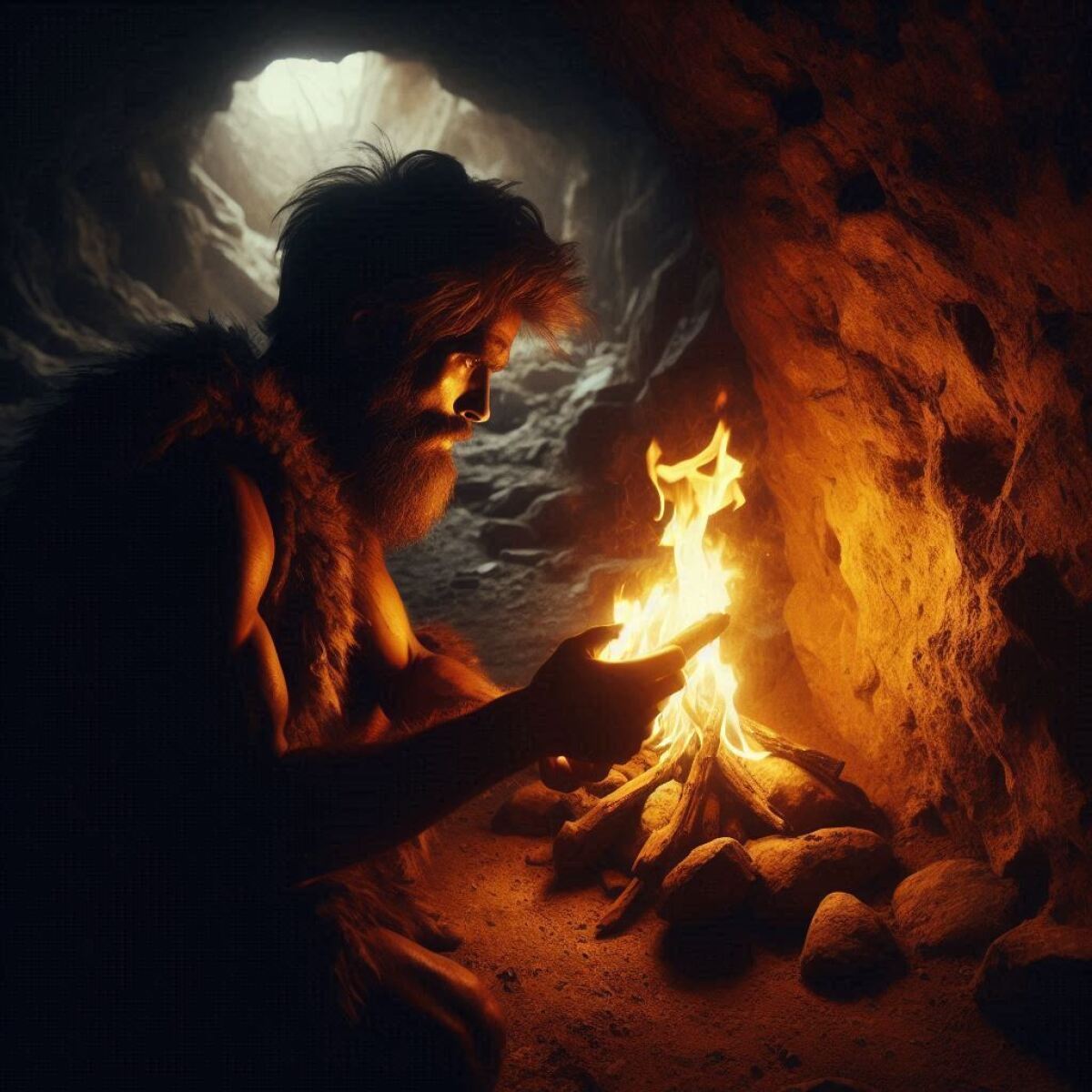
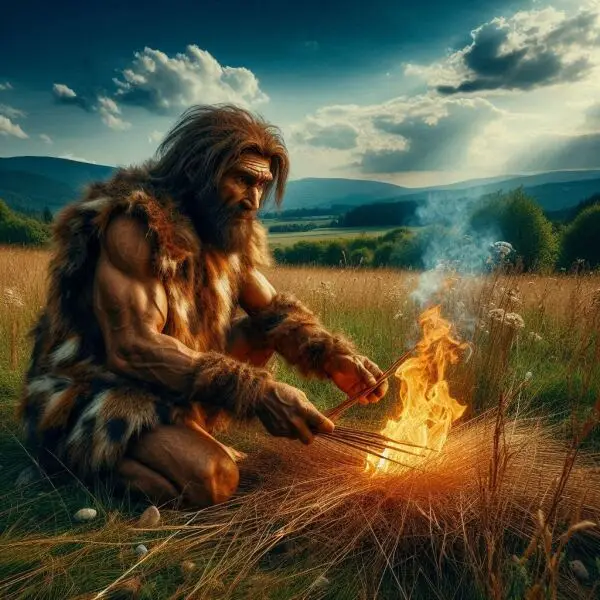
Researchers from the British Museum confirmed that ancient humans controlled and produced fire intentionally about 400,000 years ago at the Paleolithic site of Barnham, in Suffolk, eastern England.
This result moves the oldest known date for the deliberate creation of fire back by about 350,000 years; previously it was placed at Neanderthal sites in northern France, around 50,000 years old.
In other words
When we thought fire was a “young” technology, it turns out our ancestors were already playing with sparks hundreds of thousands of years earlier than we believed 🔥😉
Clear evidence of intentional fire
At Barnham, the team found a very convincing package of material evidence. Among them stood out
• A patch of heavily burnt clay, indicating a concentrated heat source
• Flint axes fractured by exposure to extremely high temperatures
• Two fragments of iron pyrite, a mineral that produces sparks when struck against flint
Pyrite is the star of the find ✨
It does not occur naturally in the Barnham area. That implies these ancient humans
• Brought it from elsewhere
• Knew that striking it against flint could generate sparks
• Used it deliberately to light fires
For four years, scientists worked to rule out the possibility of natural fires. Through geochemical analyses they showed that
• Temperatures exceeded 700 degrees
• There were several repeated burnings at the same spot
• The combustion pattern corresponds to a constructed hearth, not to lightning or an uncontrolled wildfire
As a psychologist and science communicator, I put it this way
It wasn’t chance, it wasn’t a fire “fallen from the sky”
Someone there knew what they were doing and repeated the procedure 🔍
How those ancient humans started fires
The body of evidence suggests a fairly sophisticated technique for the time. Most likely
• They struck iron pyrite against flint to obtain sparks
• They directed those sparks onto dry combustible material, such as grasses or bark
• They maintained a fixed hearth, where they burned repeatedly in the same spot
Fun fact
The technique of producing sparks with minerals persisted for thousands and thousands of years. In fact, the basic principle is very similar to how some modern lighters work.
They didn’t carry a lighter, but the concept was practically the same 😅
Most interesting for evolutionary psychology
To achieve this they needed
• Memory
• Planning ability
• Transmission of knowledge within the group
Someone had to observe, experiment, make mistakes, improve the technique and then teach it. That already speaks of a rather complex mind.
Impact of fire on human evolution
This discovery not only changes dates. It changes the story of who we are. Control of fire transformed the lives of these human groups on many levels
• It allowed them to survive in cold climates
• It gave them a powerful defense against predators
• It made possible the cooking of food
Cooking was not a mere culinary luxury 🍖
From biology and evolutionary neuroscience, we know that
• Cooking roots, tubers and meat
• Eliminated toxins and pathogens
• Greatly improved digestion
• Released more energy per bite
That extra energy is key to fueling a bigger brain, which consumes huge resources. The famous theory of the “expensive brain” fits very well here
• More fire
• More usable food
• More energy for the brain
• More cognitive capacity
Also, fire changed social life
• It allowed nighttime gatherings around the hearth
• It favored storytelling
• It facilitated group planning
• It strengthened emotional bonds
From social psychology, all that becomes fertile ground for
• The development of language
• More complex social norms
• Stronger group identity
In short
Without controlled fire for so long, our minds and societies probably wouldn’t be what they are today 🔥🧠
Who were the inhabitants of Barnham
The archaeological context places Barnham in a very interesting stage of Europe, between 500,000 and 400,000 years ago. At that time
• Brain size in early humans was already approaching that of our species
• There is increasing evidence of complex behaviors
According to Chris Stringer, an expert in human evolution, the fossils from Britain and Spain indicate that the inhabitants of Barnham were probably early Neanderthals
• They showed cranial traits linked to Neanderthals
• Their DNA points to growing cognitive and technological sophistication
As an astrologer who observes cycles and as a psychologist who looks at processes, a pattern is very clear here
It’s not a “magical leap”
It’s a matter of small innovations accumulated over hundreds of thousands of years
The controlled fire at Barnham fits into that broader process of mental and technical refinement.
What changes in the history of human technology
The British Museum team, with researchers like Rob Davis and Nick Ashton, considers this find a milestone in archaeology and in the study of the origins of our technology.
Why is it so important for science
• Because it shows that human technology has much deeper roots than we thought
• Because it confirms that 400,000 years ago there already existed
• Control of the environment
• Understanding of material properties
• Cultural transmission of techniques
And here comes the key point, which I find fascinating
Confirming the deliberate use of tools to create fire in such an ancient period advances the history of our technology by hundreds of thousands of years
They didn’t just use what they found. They were already designing solutions to their problems.
If you think about it for a moment, making fire at will is one of the first forms of “mastering energy”
From there to ovens, metallurgy, cities, engines and computers there is a long but continuous chain.
We could summarize it like this
• First a spark on pyrite
• Much later, a spark of scientific inspiration
But at heart, it all began with someone who sat in front of the darkness and decided to light it 🔥✨
Would you like another article exploring how fire relates to myths, astrology and the psychology of the “inner fire” in people? 😉